How a chair made me see my life differently: J's Story

A Realization I Couldn’t Ignore
The moment I realized my weight was limiting my life had nothing to do with a scale. It was a chair. I walked into a restaurant, noticed the delicate wicker seating, and immediately wondered whether I might break it. That quiet calculation—the instinct to scan for risk before comfort, to avoid becoming the center of attention for the wrong reason—stayed with me long after I sat down.
In that moment, I understood how easily my body could start making decisions on my behalf: where I went, how I traveled, and what felt possible. I wasn’t panicked, but I had a sense of clarity. I didn’t want my options to narrow without my consent. I wanted freedom.
A Full Life, Anchored by Friendship
At the time, aside from that restaurant moment, I didn’t feel defined by my body day-to-day. I wasn’t waiting for life to begin. I had lived in Chicago, Miami, and Seattle; worked on projects that mattered to me; pursued creative interests; and built a life that felt rich and self-directed.
Through every move, one thing stayed constant: friends. People who spoke with me, not around me. People who knew me as a whole person—I’d like to say curious, thoughtful, opinionated—not just a body taking up space.
That sense of belonging mattered more than I realized at the time. I’ve seen what happens without it: frustration curdles into shame or resentment; isolation hardens into anger. Community doesn’t solve obesity, but it can prevent it from becoming your entire identity.
Seeking Care in a System Built to Resist It
As my life continued to expand, my body began to feel more restrictive. That—not self-loathing or outside pressure—is what pushed me to seek treatment. I wanted more agency over my own life.
For me, the healthcare system, however, is not designed for clarity. Insurance requirements felt arbitrary. Access varied widely. Obesity was still treated more like a personal failing than a chronic disease.
I went through the process: consultations, referrals, psychological assessments, nutritional counseling, long conversations about risk and long-term outcomes. I seriously considered bariatric surgery. In the end, I chose not to pursue it—not because I doubted its effectiveness, but because it wasn’t how I wanted to manage my health over time.
Learning What Works - and What Doesn’t
What followed was a familiar pattern of trial and error: walking more, cutting back on sugar, and trying different medications. There were periods of progress, followed by setbacks. Some approaches helped. Others drained more energy than they gave back.
Often, the hardest part wasn’t the physical effort—it was the mental cycle of trying, hoping, recalibrating, and starting again.
When Food Stopped Demanding My Attention
The real shift came not from doing more but from doing what actually fit my life. I started a treatment that changed my relationship with food. For the first time, the constant background noise—the pull to eat when I wasn’t hungry—quieted.
A disease with many causes requires many options. People need the freedom to choose what works for them, not what looks best on paper."
That mattered, especially because intense exercise has never been consistently realistic for me because of old injuries. The experience reinforced something I’d long suspected: a disease with many causes requires many options. People need the freedom to choose what works for them, not what looks best on paper.
Living With Judgment - Without Internalizing It
Judgment around obesity is unavoidable. Sometimes it’s blatant; more often, it shows up as assumptions about discipline, intelligence, or effort. Weight remains one of the few traits people still feel entitled to comment on openly.
I’ve learned that pushing back rarely changes minds. Often, people aren’t reacting to weight at all—they’re projecting their own anger, fear, or dissatisfaction. Having strong friendships has helped me keep that judgment from becoming an internal truth. When you’re grounded in who you are, outside noise carries less weight.
A Life That Fits Me
There is no single “right” obesity story. Some people thrive on structured, exercise-heavy routines, while others don’t. Some pursue surgery, while others focus on medication, nutrition, or habit change. The mistake is assuming one path should work for everyone.
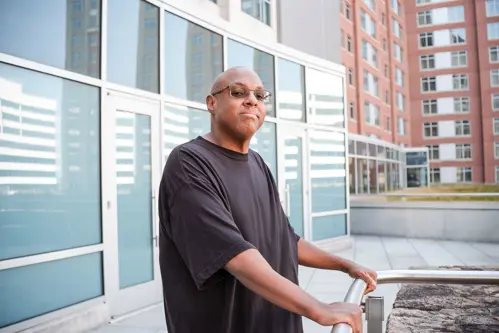
My story isn’t about achieving a perfect body. It’s about building a sustainable, honest life. I’m a writer, a collector, a partner, and a friend. Obesity is part of my health history, but it is not my identity. For me, freedom didn’t come from a chair that didn’t creak or from any single turning point. It came from having choices, supportive people, and the space to think critically about what truly works—and the confidence to live by those decisions.
The patient story shared solely reflects the unique, personal experience of that individual patient. Nothing in this story constitutes medical advice, nor should it be interpreted as treatment recommendation. Individual patient experiences and outcomes may vary and are not representative of typical results. Zealand Pharma makes no representations regarding the success or failure of any treatment, therapy, or medical intervention. Please consult your healthcare professional regarding your medical decisions.
Read more stories