A story without a finish line: Jess’ lifelong journey with obesity

The home where it all began
I’ve lived with obesity since I was about six years old. There’s a photo of me as a kid in our wood-paneled kitchen, eating straight from a loaf of bread. I grew up in a warm Italian-Irish Midwestern family where love often looked like food, and seconds — sometimes thirds — were normal. Everyone in my family was overweight to some degree. Looking back, there was always a sense that something needed to change, but none of us really knew how.
School years & bullying
From childhood through high school, I was usually the biggest kid in the room, and with the physical size came the emotional weight. By fourth, fifth, and sixth grade, the bullying became so relentless that I changed schools. Around the same time, when I was eight or nine, I read a newspaper story about a local man who had lost more than 600 pounds. I took the article to my parents, bawling my eyes out, begging them to let me join his kids’ program.
For six months, it worked — I lost 60 pounds and felt hope for the first time. Then he stopped showing up, disappearing for a book tour and radio deal. It devastated me. Even now, I feel the sting of that disappointment. I call it my “success abandonment” — the fear that progress will be taken away and I’ll end up back where I started.
When willpower meets its limits
I carried that fear into adulthood. I tried every diet imaginable, always convinced I could do it “naturally.” My brother believed weight loss was simply about “eat less, move more,” but growing up, being overweight didn’t affect him the way it affected me, and it created a gap in how we understood each other.
By 2017, my body forced a reckoning. At 580 pounds, I was confined to a hospital bed with ulcers on both legs, barely able to walk, and suffering from excruciating pain. That was my rock bottom. A surgeon encouraged me to attend a bariatric seminar. My wife came along for support — and ended up joining the program too. We had our surgeries one month apart. We did it together as a team.
One of the biggest misconceptions is that obesity equals laziness — and that couldn’t be further from my reality.
The turning point — and the people who helped me through it
Surgery wasn’t a magic fix, but it opened the door. I’ve lost nearly 300 pounds and kept about 200 off. It’s still an everyday struggle, but I’m proud of the progress I’ve made. My wife, my two girls, my mom — even my workplace — have always stood behind me. And while my brother once believed weight was just about self-discipline, over time he’s come to understand what I live with more deeply.
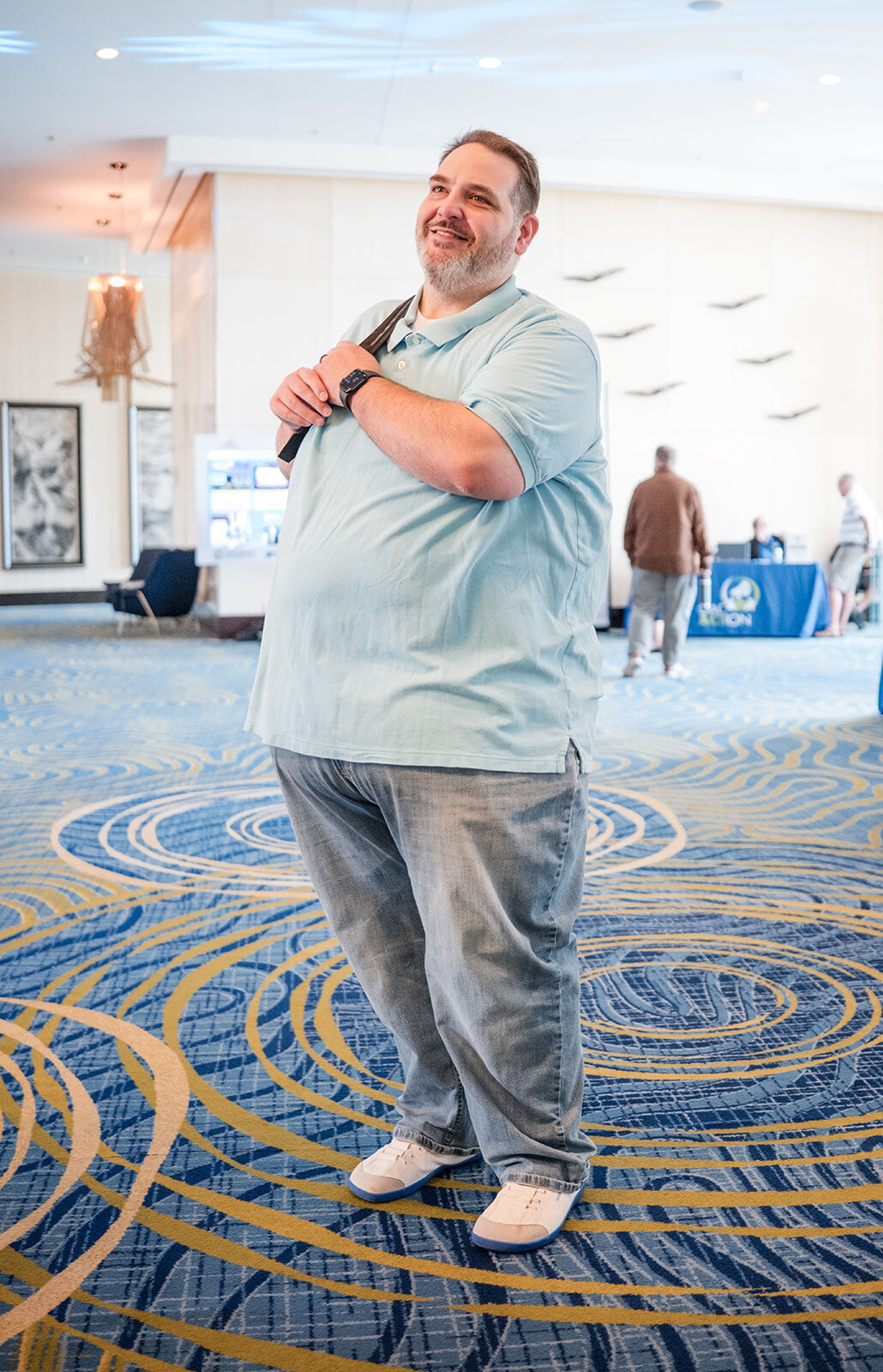
Another major part of my support system has been patient advocacy organizations. The first time I attended one of their events, it felt like walking into a room where I could finally breathe. Nobody stared. Nobody judged. Nobody needed an explanation. I was surrounded by people who understood — people who had lived versions of my story. Now I’m part of the Welcome Committee, and I make a point of greeting newcomers and helping them feel at home, because I know exactly how overwhelming that first moment can be.
The assumptions that hurt the most
One of the biggest misconceptions about obesity is the belief that it equates with laziness. That couldn’t be further from my reality. As an IT engineer, I travel for work, crawl under desks installing equipment, lift heavy servers — my work ethic has never been the issue. Obesity isn’t about willpower; it’s a chronic condition, and the stereotypes cut deeper than most people realize.
That’s why I teach my daughters—now 15 and 12—what I wish the world understood: not to judge or assume, to lead with kindness, and to remember that every person has a story you can’t see.
I try to shield myself from comments, but the ones that truly hurt come from children—those honest, unfiltered moments. A stare in the supermarket aisle. A small voice whispering, “Oh my God, he’s big.” Or the time two young boys kept offering me food, assuming from my size that I must always be hungry. They weren’t being cruel—they just didn’t know better. Those encounters can bring me to tears because I can’t explain my whole story to someone else’s child. That’s why I teach my daughters—now 15 and 12—what I wish the world understood: not to judge or assume, to lead with kindness, and to remember that every person has a story you can’t see.
My unfinished story
Looking back, I realize I was naïve to think surgery would fix everything. The truth is, in some respects, I’ve had to work even harder since then. But I’m still here. I’m still trying. My journey isn’t finished — I still have chapters left to write.
The patient story shared solely reflects the unique, personal experience of that individual patient. Nothing in this story constitutes medical advice, nor should it be interpreted as treatment recommendation. Individual patient experiences and outcomes may vary and are not representative of typical results. Zealand Pharma makes no representations regarding the success or failure of any treatment, therapy, or medical intervention. Please consult your healthcare professional regarding your medical decisions.
Read more stories